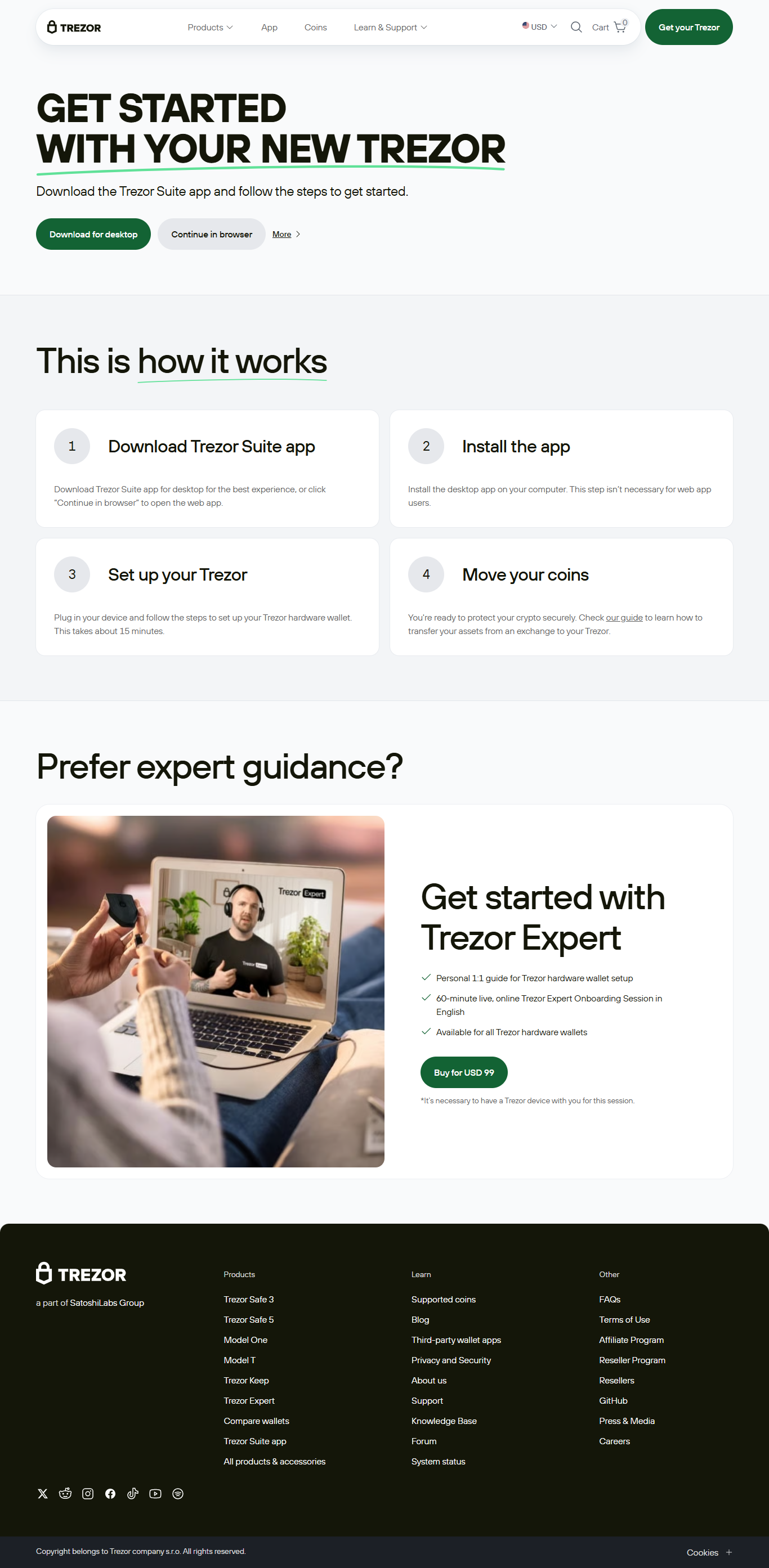
Trezor Start Guide – Secure Your Crypto Easily
Cryptocurrencies offer complete control over your finances, but with that power comes the responsibility of securing your assets. Unlike centralized exchanges, where funds are stored by a third party, cryptocurrency ownership relies on self-custody. This makes hardware wallets like Trezor essential for keeping your private keys safe. Trezor wallets store private keys offline, preventing exposure to malware, hackers, and phishing attacks, while providing an intuitive interface to manage digital assets.
This Trezor Start Guide walks you through the entire setup process: unboxing, installing software, securing your recovery seed, managing accounts, performing transactions, and adopting best security practices.
Why Trezor is Essential for Crypto Security
Trezor hardware wallets are trusted by millions of users worldwide because they combine robust security with user-friendly functionality:
Offline Key Storage: Private keys are stored in the device’s secure chip and never leave it.
Transaction Verification on Device: Every transaction requires physical confirmation on the device screen.
Wide Cryptocurrency Support: Bitcoin, Ethereum, Litecoin, and thousands of other tokens are supported.
Integration with Trezor Suite: Manage, track, and interact with assets via the official software.
Open-Source Transparency: Trezor’s firmware and software are auditable, building trust in its security.
By combining these features, Trezor protects users from threats like phishing, malware, and compromised devices.
What You Need Before Starting
Before you begin, ensure you have the following items ready:
Trezor hardware wallet: Either Trezor Model One or Trezor Model T.
Computer or mobile device: For installing Trezor Suite.
USB cable: Provided in the package for connecting the device.
Trezor Suite software: Official companion app for managing crypto.
Secure storage for your recovery seed: A metal backup or paper sheet stored offline.
A distraction-free environment: Ensures accuracy during setup.
⚠️ Avoid using pre-owned devices or wallets with pre-generated recovery seeds, as these can be compromised.
Step 1 – Unbox and Inspect Your Trezor Wallet
Check the tamper-evident seal: Ensure the box is unopened.
Verify contents: You should find:
Trezor device
USB cable
Recovery seed card
Quick start guide
If packaging looks tampered with, contact Trezor support before proceeding.
Step 2 – Download Trezor Suite
Trezor Suite is the official software for managing your Trezor hardware wallet. It is available for Windows, macOS, Linux, and as a web interface for mobile devices.
Official download link: https://trezor.io/start
Download only from the official website to avoid fake apps or malware.
Avoid links from search engines, social media ads, or third-party sources.
Once downloaded, install Trezor Suite and launch it to begin setup.
Step 3 – Connect Your Trezor Device
Connect your Trezor wallet to your computer using the USB cable.
For the Trezor Model T, the device will display a welcome screen.
Unlock your device following the prompts.
Trezor Suite should automatically detect the device and guide you through initialization.
Step 4 – Initialize Your Wallet
If the device is new:
Choose “Create a new wallet”.
Set a PIN code to protect the device from unauthorized access.
The device will generate a recovery seed — usually 12, 18, or 24 words depending on your model.
Recovery Seed Best Practices
Write all words exactly as displayed, in the correct order, on the recovery sheet or metal backup.
Store the seed offline, away from cameras or digital copies.
Consider multiple backups in secure locations to prevent loss.
The recovery seed is the master key to your wallet — anyone with access can restore your funds.
Step 5 – Verify Your Device
Trezor Suite will prompt an authenticity check:
The device performs a cryptographic verification.
Follow instructions on Trezor Suite and the device to confirm authenticity.
This protects you from counterfeit devices or supply-chain attacks.
Step 6 – Add Accounts and Manage Assets
Trezor Suite allows management of multiple cryptocurrencies:
Go to the Accounts tab.
Click Add account and select the cryptocurrency you want to manage.
Repeat for other coins and tokens.
Once added, Trezor Suite provides:
Real-time balances
Transaction history
Portfolio tracking across all accounts
It supports Bitcoin, Ethereum, Litecoin, ERC-20 tokens, and more.
Step 7 – Sending and Receiving Crypto
Receiving Funds:
Select the account.
Click Receive in Trezor Suite.
Verify the address on your device screen and share it to receive crypto.
Sending Funds:
Select the account.
Click Send, input recipient address and amount.
Verify all transaction details on the device and approve.
Always confirm transactions on the device, not just the computer, to prevent malware from altering transaction details.
Step 8 – Advanced Features
Trezor Suite offers advanced functionality:
Staking: Delegate supported coins (Tezos, Tron, etc.) to earn rewards.
Swap Cryptocurrencies: Exchange assets securely within Trezor Suite using trusted partners.
NFT Management: View and manage NFT collections while keeping private keys offline.
DeFi Access: Connect to decentralized applications safely.
Firmware Updates: Keep the device up to date for security and functionality improvements.
These features expand Trezor beyond a basic hardware wallet, providing a complete crypto management platform.
Security Best Practices
Even with Trezor’s hardware security, users should follow these practices:
Never share your recovery seed. Trezor support will never ask for it.
Confirm all transactions on the device screen.
Only download Trezor Suite from official sources.
Keep firmware updated.
Store recovery seeds offline and consider fireproof or metal backups.
Following these steps ensures protection against phishing, malware, and physical theft.
Troubleshooting Common Issues
Device not detected: Try a different USB port or cable.
Trezor Suite won’t open: Reinstall from the official website.
Firmware update errors: Confirm the update on the device and follow on-screen instructions.
Suspicious messages or phishing: Never share your recovery seed; any request is a scam.
Why This Guide Matters
A proper start guide ensures you:
Set up your device securely.
Protect your recovery seed effectively.
Manage multiple cryptocurrencies safely.
Use advanced features without compromising security.
Following the official Trezor start process minimizes mistakes and maximizes the security of your crypto assets.
Conclusion
Setting up a Trezor wallet is one of the most important steps for any cryptocurrency user. By following this Trezor Start Guide – Secure Your Crypto Easily, you ensure:
Private keys remain offline and secure.
Transactions are verified and signed safely.
Multiple cryptocurrencies are managed efficiently.
Advanced features like staking, swaps, NFTs, and DeFi are accessed safely.
Your recovery seed is the most critical element of security — protect it diligently. With Trezor and Trezor Suite, you can manage your cryptocurrency portfolio confidently, knowing your assets are secure.
Trezor provides one of the most trusted, reliable, and user-friendly platforms for anyone looking to protect their digital assets.