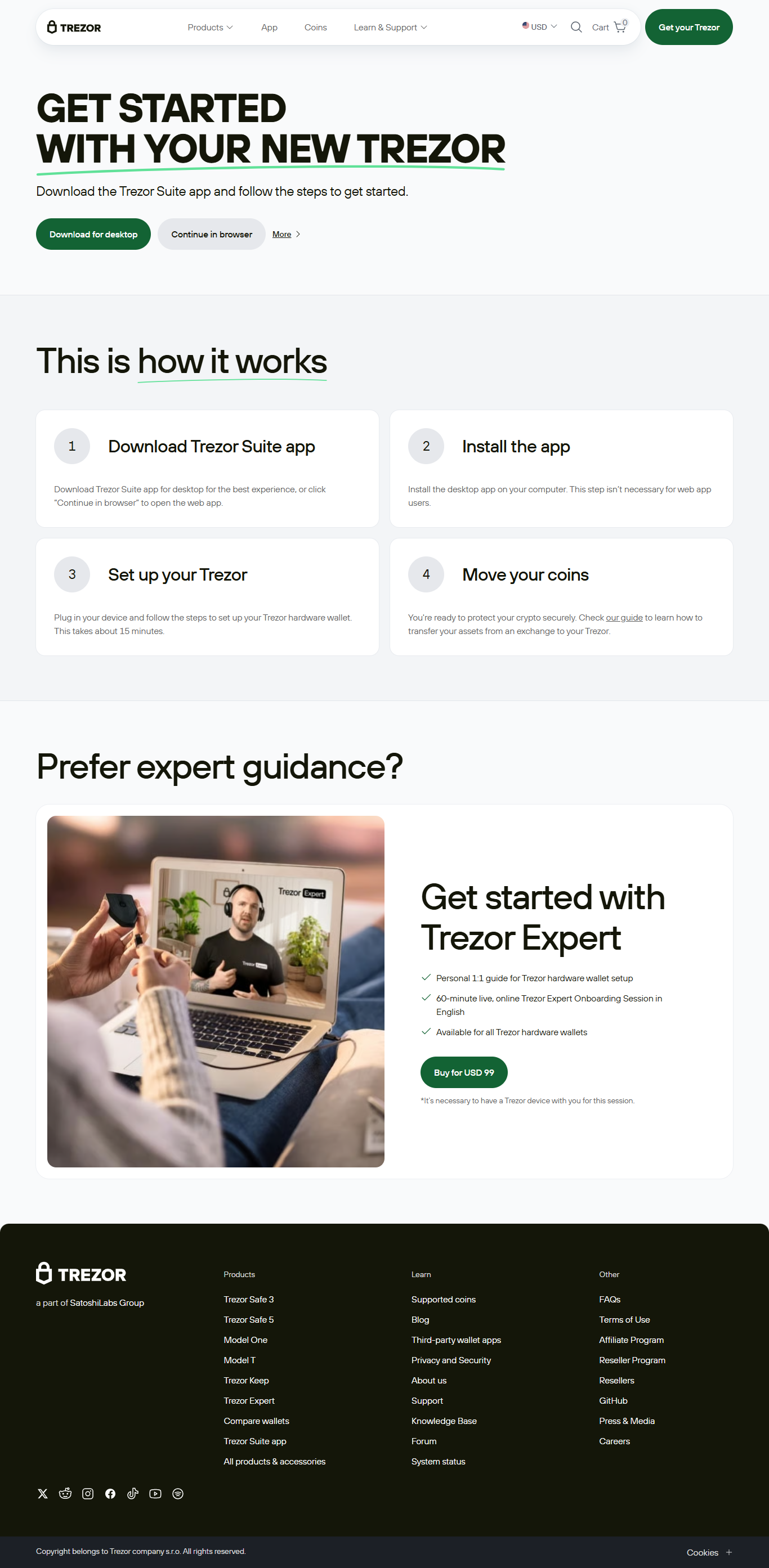
Trezor Start Guide – Protect Your Crypto Assets
Cryptocurrencies provide unparalleled control over your financial assets, but they also place the burden of security squarely on the user. Unlike traditional banking systems or exchange wallets, self-custody crypto wallets require that you protect your own private keys. One of the most trusted tools for doing this safely is a Trezor hardware wallet. Designed to keep private keys offline, Trezor wallets combine security, usability, and accessibility for anyone holding digital assets.
This Trezor Start Guide walks you step by step through setting up your Trezor device, installing the official software, securing your recovery seed, managing accounts, and best practices for protecting your crypto.
Why Use a Trezor Hardware Wallet?
Hardware wallets like Trezor offer a layer of protection that software wallets or exchange wallets cannot match. Key benefits include:
Offline Key Storage: Private keys never leave the Trezor device, keeping them isolated from malware or hacks.
Transaction Verification on Device: Every transaction must be confirmed on the device itself, preventing unauthorized transfers.
Multi-Currency Support: Trezor supports Bitcoin, Ethereum, Litecoin, and thousands of tokens and coins.
Integration with Trusted Software: Through Trezor Suite, users can manage assets, receive updates, and interact with decentralized applications securely.
Open-Source Transparency: Trezor’s firmware and software are open source and publicly auditable, building trust and transparency.
Using a Trezor wallet ensures that even if your computer is compromised, your private keys remain safe.
What You Need Before Starting
Before beginning the setup process, prepare the following:
Trezor hardware wallet: Trezor Model One or Trezor Model T.
Computer or smartphone: For installing Trezor Suite software.
USB cable: Provided in the Trezor package for connecting the device.
Trezor Suite software: Official companion app for account management.
Secure, offline storage for your recovery seed: Preferably a metal or paper backup.
Calm environment: Minimize distractions during setup to prevent mistakes.
⚠️ Never use a pre-owned Trezor device or one with a pre-written seed, as it could be compromised.
Step 1 – Unbox and Inspect Your Trezor Wallet
When you receive your Trezor:
Check the tamper-evident seal: The packaging should arrive intact and unopened.
Inspect the contents: You should find:
Trezor device
USB cable
Recovery seed card
Quick start guide
If the package appears tampered with, do not use the device and contact Trezor support.
Step 2 – Download Trezor Suite
Trezor Suite is the official software for managing your Trezor hardware wallet. It is available for Windows, macOS, Linux, and as a web interface for mobile devices.
Official download link: https://trezor.io/start
Download Trezor Suite only from the official website.
Avoid third-party websites, search engine ads, or unofficial links, as these may lead to phishing or malware. (trezor.io/start)
Once downloaded, install the software by following the on-screen instructions. Open Trezor Suite to begin the setup.
Step 3 – Connect Your Trezor Device
Connect your Trezor wallet to your computer using the provided USB cable.
For the Trezor Model T, the device will display a welcome screen.
Unlock the device following the prompts to begin initialization.
Trezor Suite will detect your device and guide you through the setup process.
Step 4 – Initialize and Secure Your Wallet
If this is your first time using your Trezor:
Choose “Create a new wallet” on the device and in Trezor Suite.
Set a PIN code on your device. This prevents unauthorized access.
The device will generate a recovery seed (usually 12, 18, or 24 words depending on the model).
Recovery Seed Best Practices:
Write the seed exactly as displayed, in order, on the recovery card or metal backup.
Store your seed offline and in a secure location. Avoid digital copies or cloud storage.
Consider multiple backups in different secure locations for redundancy.
Your recovery seed is the master key to your wallet. Anyone with access can restore your wallet and steal your funds.
Step 5 – Verify Your Device
Trezor Suite will prompt you to verify the device’s authenticity:
The device will perform a cryptographic check to ensure it is genuine.
Follow the on-screen instructions to confirm that your device is legitimate and secure.
This verification step protects you against counterfeit devices or supply-chain attacks.
Step 6 – Add Accounts and Manage Crypto Assets
Once your wallet is initialized:
Open Trezor Suite and navigate to Accounts.
Click Add account and select the cryptocurrency you want to manage.
Repeat for all supported coins and tokens you hold.
Trezor Suite allows you to monitor balances, transaction history, and portfolio performance from a single dashboard. It supports thousands of tokens, including ERC-20, Bitcoin, Litecoin, and more.
Step 7 – Send and Receive Crypto
Receiving Crypto:
Choose the account for the coin you want to receive.
Click Receive in Trezor Suite.
Verify the address on your Trezor device and share it to receive funds.
Sending Crypto:
Select the account.
Click Send, enter the recipient address and amount.
Verify all transaction details on the device screen and approve.
Always confirm transactions on the Trezor device, not just the computer, to prevent malware from manipulating transaction data.
Step 8 – Use Advanced Features
Trezor Suite supports advanced functionality:
Staking: Delegate coins like Tezos or Tron to earn rewards.
Swap cryptocurrencies: Exchange coins within Trezor Suite using trusted third-party integrations.
NFT and DeFi access: Safely interact with decentralized applications and manage NFTs while keeping private keys offline.
Firmware updates: Keep your device updated for security patches and new features.
These features expand the functionality of Trezor beyond basic wallet management.
Security Best Practices
To maximize safety:
Never share your recovery seed. Trezor support will never ask for it.
Verify all transactions on your device.
Download Trezor Suite only from official sources.
Update firmware regularly to protect against vulnerabilities.
Backup your recovery seed securely. Use offline and fireproof storage if possible.
Following these steps ensures your crypto assets remain safe from phishing, malware, and hacking attempts. (trezor.io/start)
Troubleshooting Common Issues
Device not detected: Try a different USB port or cable.
Trezor Suite not opening: Reinstall from the official website.
Firmware update errors: Confirm updates on the device and follow on-screen instructions.
Scams and phishing attempts: If any website or person asks for your recovery seed, it is a scam.
Why Trezor Start Guide Is Important
A proper start guide ensures:
Safe setup of your device and recovery seed.
Secure initialization of accounts for multiple cryptocurrencies.
Confidence in managing crypto without risking exposure to hackers or scams.
Following the official start guide reduces errors and helps you adopt best practices in crypto security.
Conclusion
Setting up a Trezor hardware wallet is one of the most important steps for securing your cryptocurrency. By following this Trezor Start Guide:
You ensure your private keys remain offline.
You can safely send, receive, and manage crypto assets.
You gain access to staking, NFT management, and DeFi safely.
You minimize risk from phishing, malware, and counterfeit devices.
Your recovery seed is the most critical piece of security — protect it at all costs. With Trezor and Trezor Suite, you gain a trusted, reliable, and user-friendly platform to securely manage your cryptocurrency portfolio.